
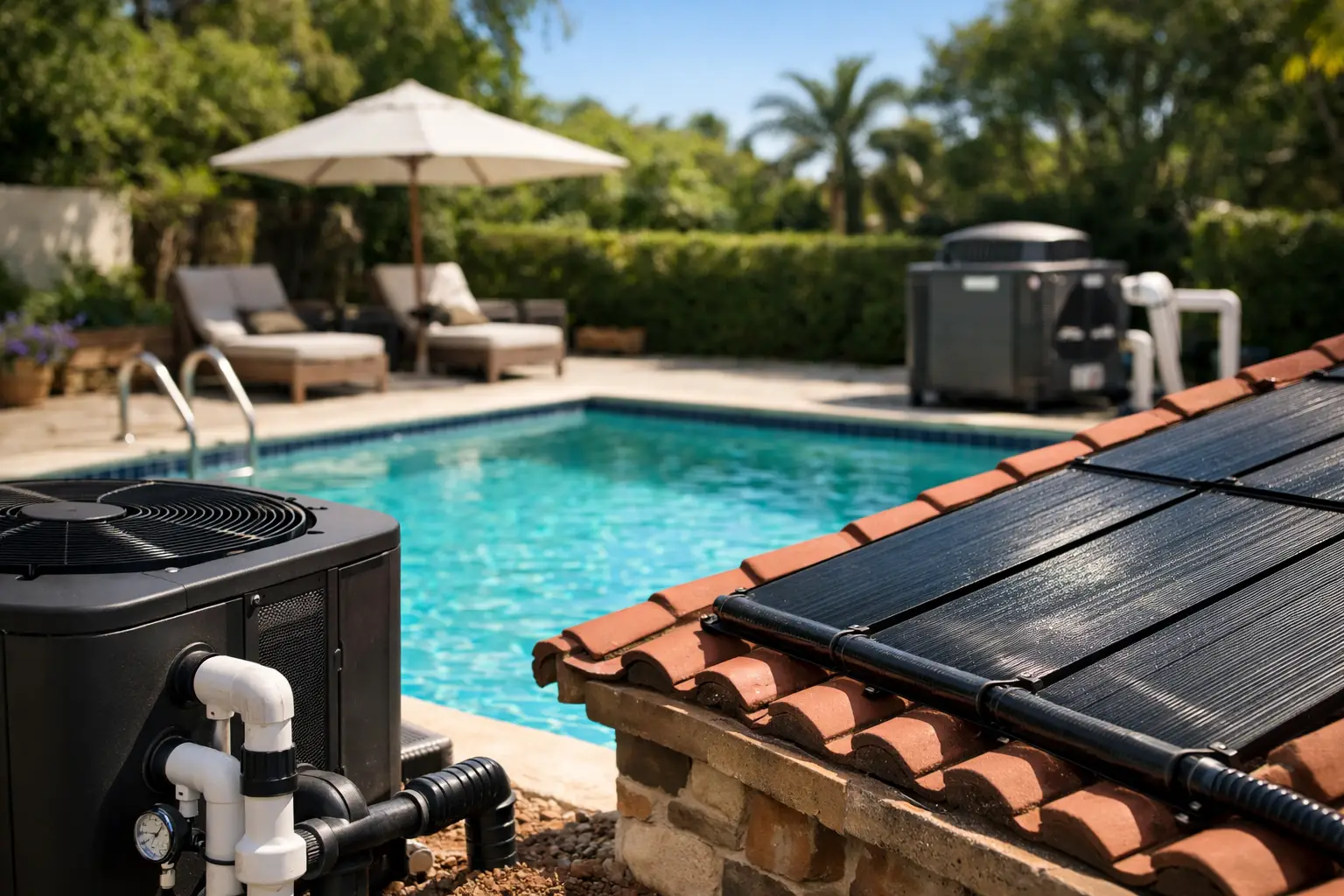
A pool that looks perfect but stays too cold to use is a very expensive view. Choosing the best pool heating system is not really about buying the most powerful unit on the market. It is about matching the heating method to your pool size, how often you swim, local weather, energy costs, and how quickly you expect the water to warm up.
That is where many pool owners, communities, and hospitality properties get stuck. One system is cheaper to run but slower. Another heats fast but costs more per hour. A third sounds efficient on paper, but only works well if the installation is designed correctly. The right answer depends on the pool and on how the pool is actually used.
What is the best pool heating system?
For most residential pools, a heat pump is often the best overall pool heating system because it offers a strong balance of efficiency, stable operating cost, and reliable comfort across a long swim season. But that is not a universal rule.
If you need rapid heating for occasional use, gas can be the better fit. If your property gets strong sun exposure and you want the lowest ongoing energy cost, solar can make sense. If the pool is used heavily or has demanding service expectations, a hybrid setup may be the smartest long-term decision.
A good recommendation should never start with the equipment brand. It should start with the pool profile: volume, exposure, wind, cover use, swimmer expectations, and the number of days per year the pool needs to stay at target temperature.
Best pool heating system options compared
Heat pumps
Heat pumps work by extracting heat from the air and transferring it into the pool water. In mild to warm climates, they are usually the most efficient mainstream option.
Their biggest advantage is operating economy. They typically use less energy than electric resistance heating and can cost much less to run than gas over time. They also provide steady, controlled heating, which is ideal when the goal is to maintain a comfortable water temperature rather than create a quick temperature jump.
The trade-off is speed. A heat pump does not usually deliver the same fast recovery as a gas heater. If you leave the pool cold for days and want it warm by the weekend, you may find the waiting time frustrating. Performance also depends on air temperature. In warmer regions, that is less of a problem. In colder snaps, heating output can drop.
For many homeowners and managed properties that want predictable running costs, this is the best pool heating system category to evaluate first.
Gas heaters
Gas pool heaters burn natural gas or propane to heat water quickly. Their main strength is simple: speed.
If a villa is occupied intermittently, or a hotel needs the pool ready fast after a cool period, gas can solve a problem that a heat pump solves more slowly. That immediate response is valuable in real-world operation, especially when guest comfort or owner convenience matters more than maximum efficiency.
The downside is operating cost. Gas heaters are usually more expensive to run than heat pumps if used regularly for long periods. They also require proper gas supply planning, ventilation, and a sound installation layout. For some sites, those infrastructure requirements affect the real project cost more than the heater itself.
Gas often makes sense when usage is occasional but expectations are high. It is less attractive when the pool needs daily temperature maintenance across an extended season.
Solar pool heating
Solar heating uses roof-mounted or ground-mounted collectors to warm pool water with sunlight. The appeal is obvious: very low ongoing energy cost once installed.
In the right setting, solar can be an excellent solution. If the property has strong sun exposure, enough collector area, and a realistic expectation of seasonal performance, it can reduce heating bills significantly. For environmentally focused owners, it is also an appealing option from a sustainability standpoint.
But solar is not a one-size-fits-all answer. Output depends on weather, collector sizing, orientation, and the amount of heat the pool loses overnight. If the pool is exposed to wind or used in shoulder months when sunlight is less predictable, solar on its own may not provide the consistency some owners expect.
Solar works best when it is designed as part of the whole system, not treated as a magic fix.
Hybrid systems
A hybrid setup combines two heating methods, most commonly a heat pump with gas support, or solar backed up by a conventional heater.
For larger homes, communities, and hospitality pools, this can be the most practical answer. A heat pump handles efficient base-load heating, while gas covers quick recovery or peak demand. Solar can lower baseline cost, while another heater provides reliability when sunlight is not enough.
The initial investment is higher, and controls need to be configured properly. But for pools with demanding usage patterns, hybrids often give the best balance between comfort, operating cost, and resilience.
How to choose the best pool heating system for your property
The first question is not which heater is best. It is how you use the pool.
If the pool is used almost every day and you want a long swim season with controlled costs, a heat pump is usually the strongest option. If the pool is heated only when guests arrive or on selected weekends, gas may be more practical because it heats faster. If energy cost is your top concern and your site has excellent solar conditions, solar deserves serious consideration.
Pool size matters just as much. An undersized heater is one of the most common reasons owners feel disappointed with a new installation. The unit may work, but it will take too long to reach temperature or struggle in windy conditions. Proper sizing should account for water volume, desired temperature rise, ambient conditions, and heat loss.
A pool cover also changes the equation. Many heating complaints are not actually heater problems. They are heat-loss problems. If the pool stays uncovered at night, especially in windy or cool conditions, a large share of the heat escapes before anyone gets to enjoy it. In those cases, adding or upgrading a cover may improve results more than changing the heater.
Operating cost versus installation cost
A cheaper installation is not always the lower-cost decision. This is where a lot of budget planning goes wrong.
Gas heaters can have a lower upfront equipment cost in some cases, but higher ongoing energy bills. Heat pumps often cost more to install but can be more economical over years of regular use. Solar can reduce operating expense dramatically, but only if the site and design support effective performance.
The smarter way to compare systems is to look at total cost of ownership. That includes equipment, installation adjustments, electrical or gas upgrades, maintenance needs, average runtime, and expected seasonal usage. For clients who manage properties as assets, this broader view usually leads to better decisions.
Common mistakes when selecting a pool heater
The biggest mistake is buying based on headline claims instead of the pool’s real operating conditions. A heater that performs well in one property may be the wrong fit for another.
Another mistake is ignoring hydraulic design. Flow rate, pipe condition, filtration compatibility, and control settings all affect heater performance. Even good equipment will underperform if the supporting system is poorly configured.
It is also common to focus on heating without addressing insulation and exposure. Wind, shade, evaporation, and nighttime heat loss can undermine any system. In coastal areas or exposed properties, that detail matters more than many owners expect.
Finally, some installations are planned around peak summer assumptions. That misses the real reason most clients invest in heating: extending the season and making the pool usable when the weather is less forgiving.
When professional assessment makes the difference
Pool heating is one of those upgrades that looks simple from a product catalog and becomes much more technical on-site. The right recommendation depends on measurements, not guesswork.
A proper assessment should review pool volume, orientation, wind exposure, intended temperature, expected swim months, equipment space, utility access, and whether the existing filtration and pipework can support the new setup. For properties in warm but variable coastal climates such as Marbella, Mijas Costa, or Estepona, that site-specific review is especially useful because mild averages can hide meaningful day-to-day performance differences.
This is also where long-term service matters. A heating system is not just a box installed beside the plant room. It needs commissioning, monitoring, and periodic checks to keep performance stable and avoid inefficient operation.
If you are trying to decide on the best pool heating system, the most reliable answer is rarely the most generic one. It is the system that fits your usage, your property, and your cost priorities without creating avoidable problems later. A warmer pool is good. A warmer pool that is efficient, predictable, and properly designed is much better.


